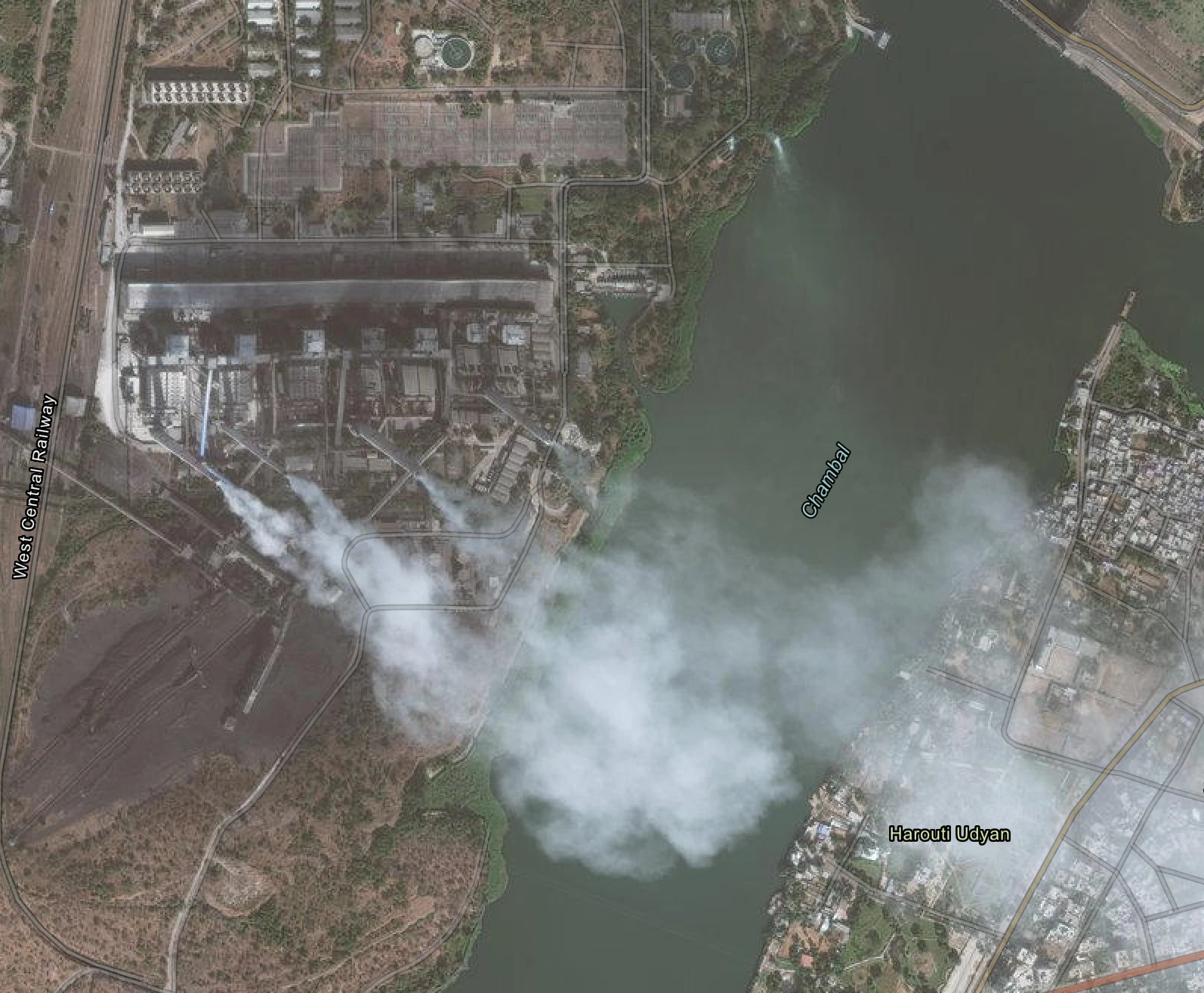
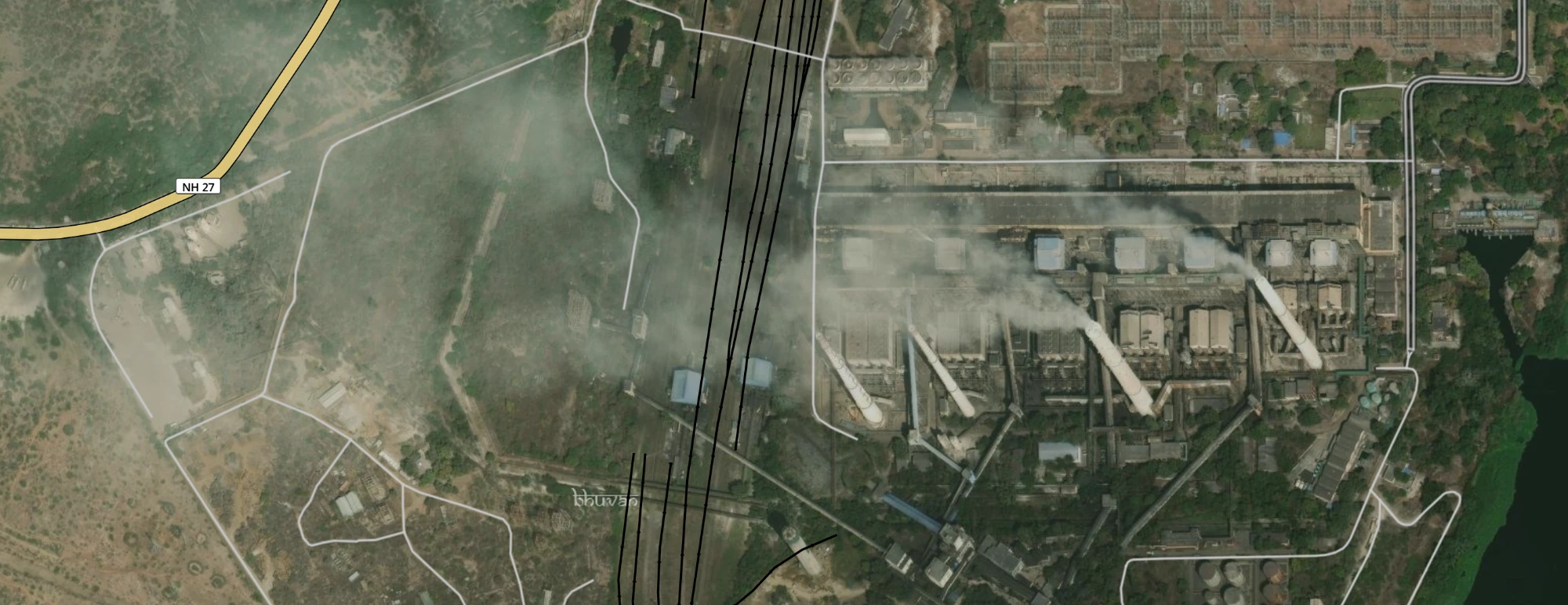
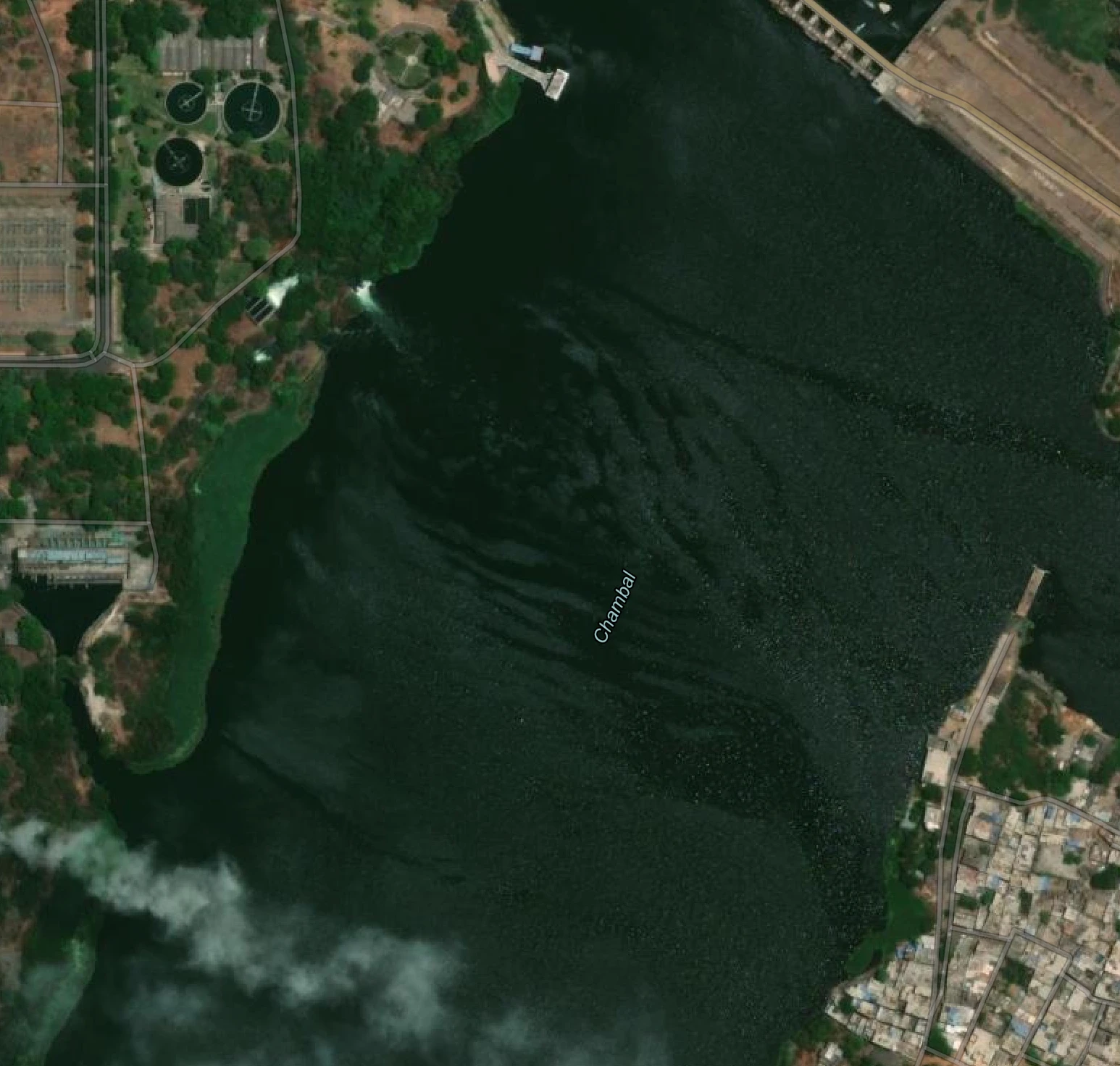
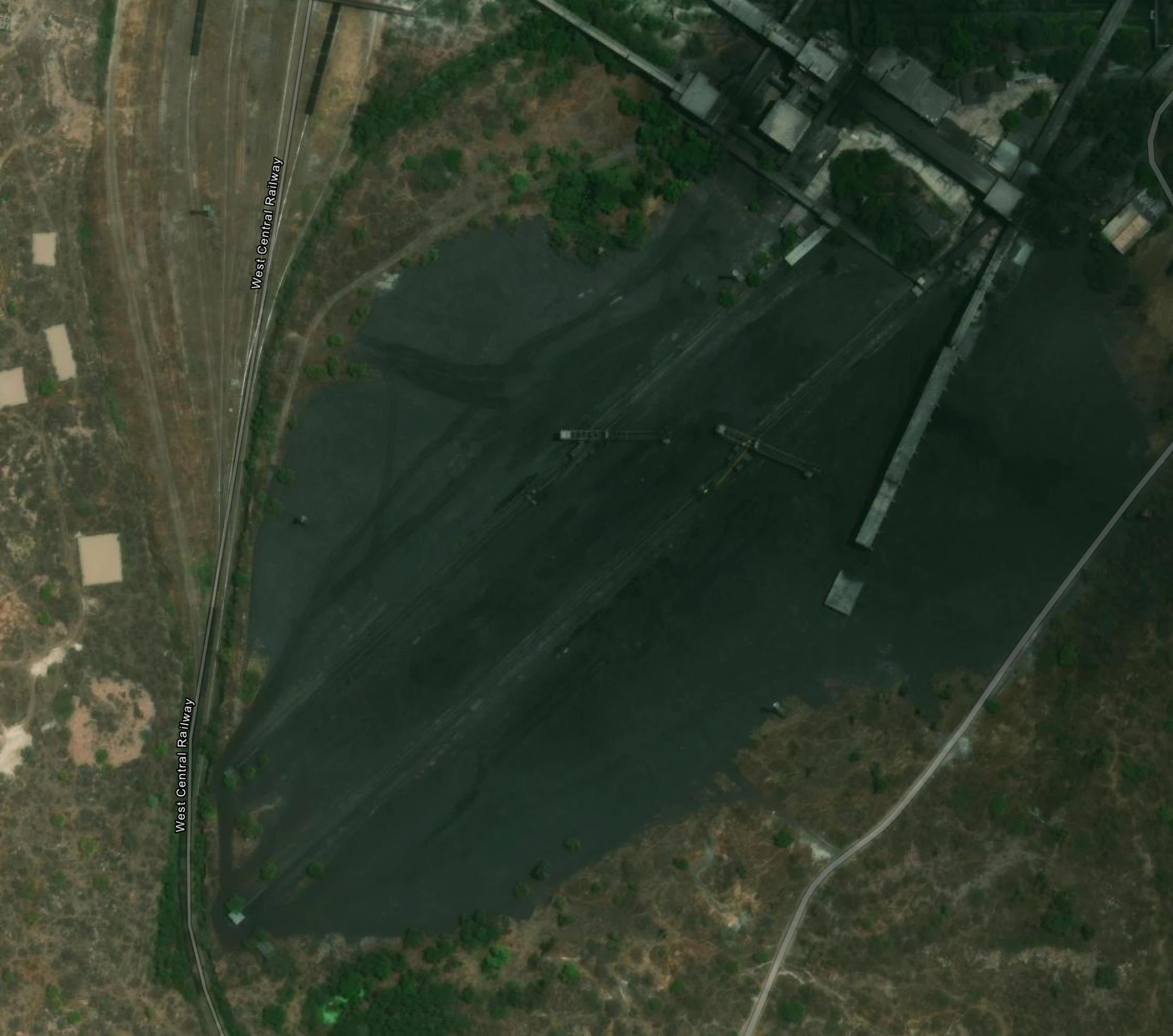
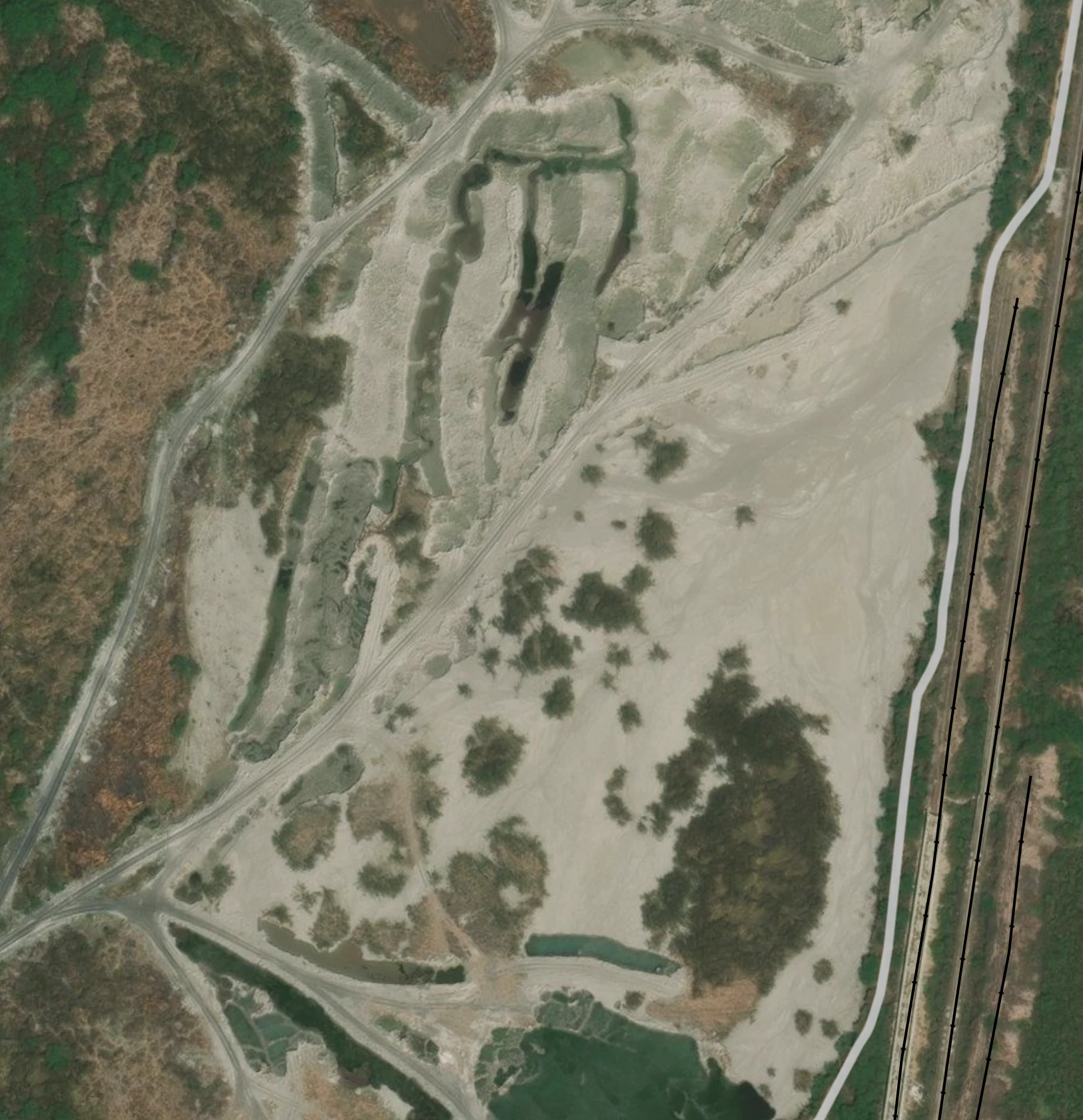
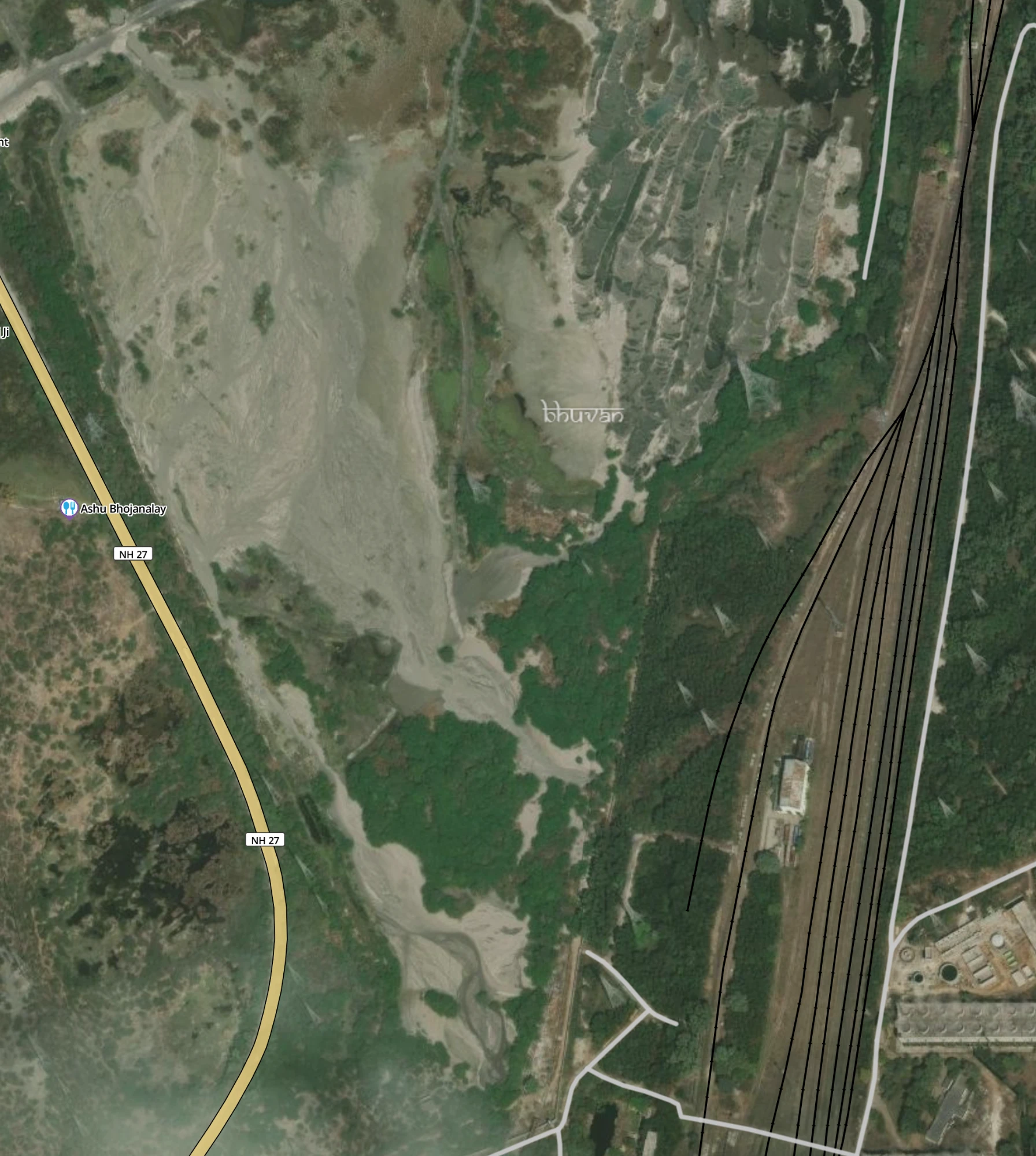
The plant is run by the Rajasthan state utility (RRUVNL). It stands in Sakatpura on the left bank of the Chambal, about 2 km from the city. It has seven units with a combined 1,240 MW[1].
The Centre for Science and Environment found that six of the seven units fail particulate matter norms, and every unit fails the sulphur dioxide and water norms set by the environment ministry. Units 1 to 4 were fitted with dust filters (ESPs) built for 150 mg/Nm³ of particulate output, while the legal limit is 100. Those units have no plan for flue gas desulphurisation[1].
Cooling Units 1 to 5 takes an open-cycle flow of 1,180 cusecs from the Kota Barrage, and the warmed water goes back to the river. In 2021 the effluent and sewage treatment plants existed only as submitted plans[1].
The city breathes it too. Kota is a non-attainment city under the National Clean Air Programme, which means its air fails national standards[2]. A 2024 study of 47 indoor dust samples from Kota homes concluded that coal burning at the plant is the major source of the heavy metal burden in the study area[5].
Seven units, one report card
CSE assessment, reported June 2021
PMSO₂Water
Red means the unit fails the norm. CSE did not say which unit meets the PM limit, so it is shown here as Unit 7, the newest. All seven fail SO₂ and water.